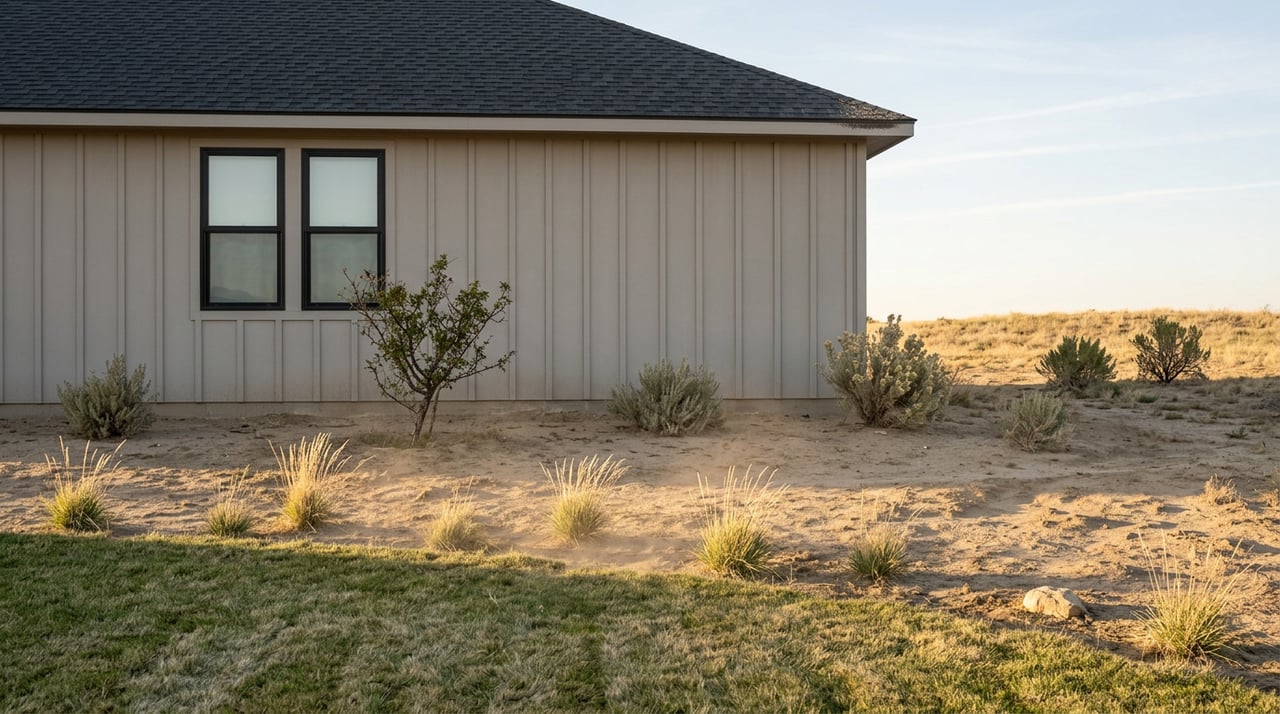
Buyers moving to Spring Creek from a city with a single combined utility bill tend to make the same assumption at closing. They see a homeowners association fee on the settlement statement and figure it rolls up the community costs: roads, maybe water, maybe the sewer hookup. It doesn't. In Spring Creek, that one line item covers roads and amenities. Water comes from an entirely different company with its own account and its own billing history. And on a meaningful share of properties, wastewater isn't a utility bill at all. It's a private septic system sitting in the yard, aging on its own clock, with no one but the homeowner responsible for what happens when it fails.
None of these three systems talk to each other. That's the part that catches people off guard, and it's worth understanding before you write an offer rather than after your loan officer calls with a question you weren't expecting.
The Bill That Isn't What It Looks Like
The Spring Creek Association set 2026 assessments at $86 a month, or $1,032 for the year, payable to a private, self-funded property owners association that receives no support from sales tax, property tax, or state and federal funds. About 47 percent of that money goes toward maintaining roughly 150 miles of chip-sealed roads across the community, along with snow removal and the association's list of amenities: the golf course, the marina, the sports complex, the Horse Palace equestrian center, a campground and rifle range. Control of the community passed from the developer to residents in 1981, and the association now governs close to 5,420 lots.
That's a real and useful monthly cost to understand when you're budgeting a purchase. What it is not is a utility bill. The association's own guidance to new homeowners makes the separation explicit: water comes from a different provider, property taxes go to Elko County, and the HOA payment funds roads and shared spaces only. If you're used to an HOA that bundles trash, water, or sewer into one fee, Spring Creek's structure requires you to budget for those separately.
Water Comes From a Different Company Entirely
Water service in Spring Creek runs through Great Basin Water Company, a separate business with its own account setup, its own meter, and its own complaint process through the Public Utilities Commission of Nevada rather than through the homeowners association. If you have a rate dispute or a service question, the association can't resolve it. You call GBWC, and if that doesn't work, PUCN.
The more consequential fact for buyers is what that separation has meant for sewer access. A few years back, Great Basin Water Company told the association's board that its treatment plant was approaching capacity and began steering new development toward septic tanks as a short-term workaround while it searched for a longer-term fix. The Public Utilities Commission had already denied the company's request to build a larger plant, ruling that the cost of expansion needed to fall on new development rather than existing ratepayers. That decision shaped how new sections of the community got served, and it's part of why septic remains the practical default across large stretches of Spring Creek rather than a niche rural preference.
If you're comparing two homes and one connects to sewer while the other runs on a private system, that difference usually isn't about the builder's taste. It often traces back to which section of the community was platted before or after the plant's capacity became the limiting factor.
The Math Nobody Runs at the Open House
Here's where the numbers start to matter for your inspection budget, not just your monthly cost estimate.
As of mid-2026, the typical home listed for sale in Spring Creek was built around 1995 and sits on roughly two acres, consistent with a community built out in large-lot sections rather than dense subdivisions. A conventional septic system's working life is commonly cited in the 25 to 40 year range depending on soil conditions, tank material, and how consistently it's been pumped and maintained.
Run that math forward. A system installed alongside a home built in 1995 is now more than 30 years old. That doesn't mean it's failing. Plenty of well-maintained systems reach the far end of that range without incident. But it does mean a 30-year-old septic system sits inside, or past, the window where problems become statistically more likely, and a buyer touring that home is looking at infrastructure that deserves its own dedicated inspection rather than a passing mention on a general home inspection checklist.
The EPA's general guidance for homeowners is to have a septic system inspected roughly every three years and pumped every three to five years. If a seller can't produce pumping records going back that far, that gap itself is information, not just an inconvenience.
Why This Becomes a Financing Problem, Not Just a Repair One
A failed septic system in Spring Creek isn't only a repair cost. It's a financing obstacle that can end a deal outright depending on how the buyer is paying.
The Septic Guide says buyers using FHA, VA, or USDA loan programs cannot close on a property with a failed septic system. If an inspection during escrow turns up a failure, the buyer has to qualify under a different loan program, which isn't always possible on short notice. In a rural community where these loan types make up a meaningful share of the buyer pool, a septic problem discovered late in escrow doesn't just cost money. It can cost the buyer entirely.
This is the practical argument for a pre-listing septic inspection if you're selling, and for building septic evaluation into your offer timeline if you're buying. Waiting until the appraisal or the lender's checklist flags it puts everyone on the clock at the worst possible moment.
What Nevada's Disclosure Law Actually Promises You
Nevada requires sellers to complete a disclosure form under NRS 113.100 through 113.150, and the state's approved form asks direct questions about drainage, soil stability, encroachments, and known defects. It's a meaningful document, but it comes with a limit that's easy to miss: the Nevada Real Estate Division form explicitly states that the seller doesn't warrant the condition of the property and isn't representing expertise in construction or engineering. It discloses what the seller knows. It doesn't guarantee what a licensed inspector would find.
That distinction matters most on septic and well systems, where a seller who has never had a problem may genuinely not know their tank's baffles are failing or their leach field is compromised. Payment for a septic inspection becomes a negotiation point in the purchase agreement rather than something either side can assume.
Before You Write an Offer
A short list worth working through on any Spring Creek property before you commit:
- Confirm the SCA assessment is current and ask for the transfer paperwork.
- Get the Great Basin Water Company account history for the property, not just a current bill, to understand usage patterns and any past service issues.
- Ask directly whether the home is on septic or connected to sewer, and if it's septic, request pumping and inspection records going back as far as the seller has them.
- Budget for a standalone septic inspection, typically in the few-hundred-dollar range, separate from your general home inspection.
- If you're financing with FHA, VA, or USDA, build extra time into your contract for septic evaluation before your inspection contingency expires.
Frequently Asked Questions
Does every home in Spring Creek use a septic system? No. Some sections connect to Great Basin Water Company's sewer service, particularly where capacity and permitting allowed it. Many others, especially in older and more spread-out parts of the community, rely on private septic. Confirm the specific parcel rather than assuming based on the neighborhood.
Who typically pays for the septic inspection, the buyer or the seller? The cost is negotiated as part of the purchase agreement, and many sellers choose to complete an inspection before listing so they control the timeline and the results rather than reacting to them during escrow.
Can the HOA assessment increase from year to year? The Spring Creek Association sets its assessment annually based on operating costs, and the current rate is $86 a month for 2026. Check with the association directly for the most current figure before closing, since it can change from one budget cycle to the next.
Buying in Spring Creek means owning pieces of infrastructure that a city buyer never has to think about separately. Getting the road fee, the water account, and the septic history sorted out before you're under contract is the difference between a clean closing and a late-stage surprise. If you're comparing properties in Spring Creek and want someone who already knows which sections carry which utility setup, Carla Bailey can walk through it with you. Schedule a free consultation before you write your next offer.
This article is general information, not legal, tax or financial advice. Consult a qualified professional about your situation.