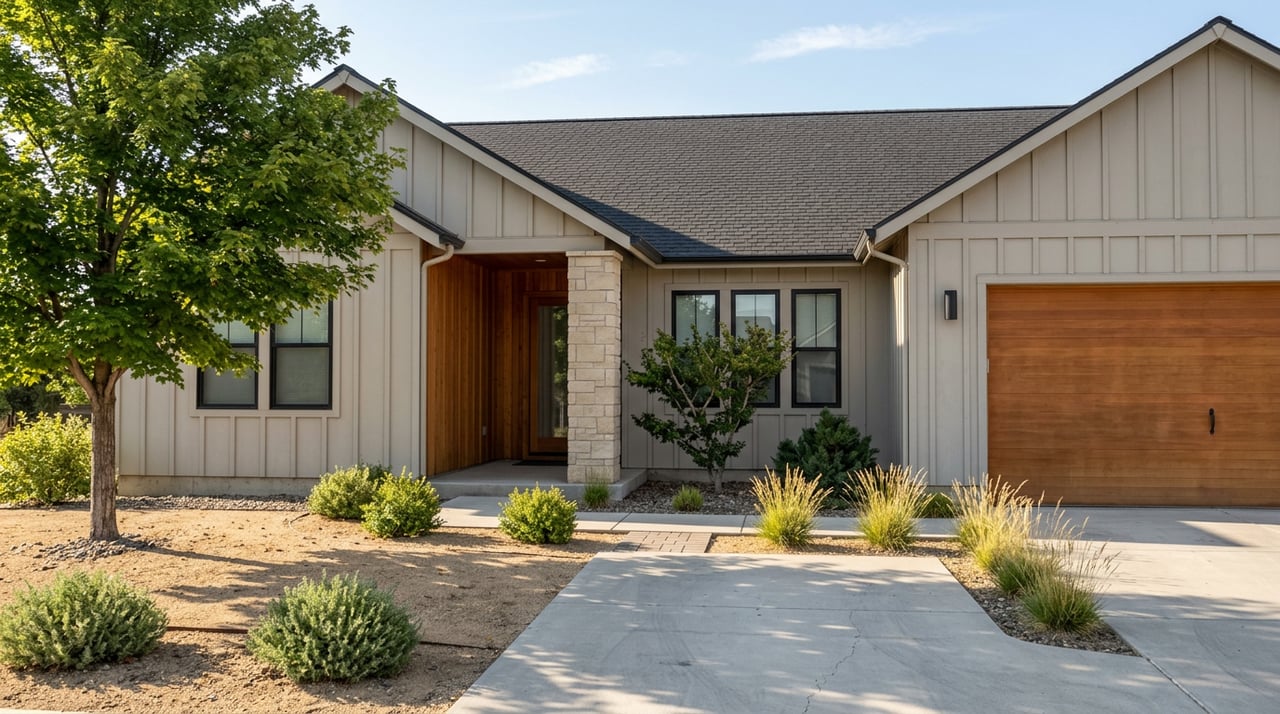
A buyer closes on a well-kept three-bedroom in Spring Creek, pulls the seller's disclosure, and circles the property tax line for their monthly budget. The number looks reasonable, somewhere in the low thousands. Then the first bill from the county arrives under their own name, and it's not the number they circled. Nothing about the house changed. The roof is the same roof. The lot is the same lot. What changed is whose name is on the deed, and, as AskDoss explains, in Nevada that single fact resets the entire tax calculation.
This isn't a Spring Creek quirk or an Elko County oversight. It's how Nevada's property tax abatement law works everywhere in the state, and it produces a specific, measurable gap between what a listing shows and what a new owner pays. Understanding that gap, and why it exists, tells you more about a Spring Creek property than the tax line on the MLS sheet ever will.
The Bill on the Sheet Measures the Seller, Not the House
Nevada Revised Statutes 361.4723 caps how much a property tax bill can grow from one year to the next. An owner-occupied primary residence gets a 3 percent ceiling. Everything else, including second homes, straight rentals, land, and commercial property, gets a cap of up to 8 percent. The cap applies to the tax bill itself, not to the assessed value underneath it, which is free to climb with the market every year regardless of the cap.
Here's the part that catches buyers off guard: that cap doesn't travel with the house. It belongs to the ownership, and a change of ownership resets it. The seller's capped bill, built up over however many years they've lived there, has no bearing on what the new owner will be billed. The new bill is calculated fresh, off the property's current taxable value,
That's why a home that sold five years ago and a nearly identical home that sold last month can carry tax bills that look nothing alike, even sitting on the same street with the same assessed rate applied to both.
Same Rate, Different Bill, and the Reason Is Timing
Elko County applies an effective property tax rate of roughly 0.87 percent across Spring Creek. Apply a single rate uniformly across a community and you'd expect tax bills to cluster fairly close together for homes of similar value. They don't. Local property tax data for Spring Creek shows a median annual bill of $1,651, but the spread beneath that median is wide: the 25th percentile sits at $1,098, while the 75th percentile climbs to $2,457 and the 90th percentile reaches $3,193.
That's not a story about some homes being worth three times as much as others. It's a story about turnover. A homeowner who bought a decade ago and has ridden the 3 percent cap every year since is paying against a base that's years behind current market value. A buyer who closed last year is paying against this year's number, uncapped by any history. Same neighborhood, same rate, radically different outcomes, and the difference has nothing to do with square footage.
For a buyer comparing two Spring Creek listings, this means the tax line tells you something real, but not the thing most people assume. A strikingly low property tax figure on a listing sheet is often a signal of long ownership tenure, not a signal about the house's underlying value or condition. Budget off it and you may be budgeting off someone else's decade of appreciation, not your own first-year number.
The Year-One Trap for New Construction
The cap works differently again for a new build. Under the same statute, new construction and any property with a change of authorized use gets no abatement cap at all in its first year on the tax roll. The 3 percent or up to 8 percent cap only kicks in starting the following fiscal year.
That matters directly for anyone weighing a new-construction purchase in a Spring Creek subdivision like Cambridge Estates against an equivalent resale home nearby. The resale home may already be sitting inside a capped bill, however that bill got built up. The new build's first tax year reflects the property at its full current taxable value with no cushion, and only in year two does the buyer's own cap start doing any work. Comparing a new build's year-one tax line against a resale home's current bill is comparing two different points in the same system, not two comparable numbers.
The Postcard That Decides Which Cap You Get
None of this happens automatically in your favor. After a deed records, the Elko County Assessor's Office mails an owner-occupancy claim form, and that single form is what moves a parcel from the default high cap to the 3 percent primary-residence cap. It is worth making sure the form was filed rather than assuming the title company handled it.
The form can be filed online through the county's own site, mailed in, or dropped at the payment drop box at 551 Court Street in Elko, which the Treasurer's Office also uses for exemption cards and rental affidavits. The cutoff to take effect for the upcoming fiscal year has historically landed around June 30, according to the Elko County Assessor's Office, though the exact date is set annually, so confirming the current deadline with the Assessor's Office at the time of closing is worth the phone call.
One more detail worth knowing before you sign anything: the Elko County Treasurer's Office says that under Nevada law, a buyer is responsible for any property taxes not yet paid as of the close of escrow. Tax bills in Elko County are mailed in July, with the first installment due the third Monday in August. Knowing where that falls relative to your closing date is part of knowing what you're actually walking into, not an afterthought for after the keys change hands.
Frequently Asked Questions
Does refinancing reset my tax cap? A straightforward refinance generally leaves the cap alone, as Clark County explains. Moving a property into a trust or adding a name to the deed can be treated as a change of ownership, so it's worth checking with the Assessor's Office before making either move.
Can I hold the 3 percent cap on more than one Nevada property? No. The law allows only one property statewide to be claimed as a primary residence at the 3 percent rate. A second home or a rental defaults to the higher cap
What if I never received the owner-occupancy postcard after closing? If a couple of months pass with nothing in the mail, call the Assessor's Office directly and ask for a Property Tax Cap Claim Form.
The tax line on a Spring Creek listing is real data, but it's a photograph of someone else's timeline, not a forecast of yours. Knowing how to read it, and how to file the one form that actually sets your own rate, is the difference between budgeting accurately and budgeting off a number that was never going to be yours.
If you're comparing Spring Creek properties and want the real first-year numbers worked through before you write an offer, Carla Bailey can walk through it with you. Schedule a Free Consultation to get a straight answer before the postcard even arrives.
This article is general information, not legal, tax or financial advice. Consult a qualified professional about your situation.